
-
Date
Thursday, October 15 2026
-
Time
6:00pm - 8:00pm
-
Location
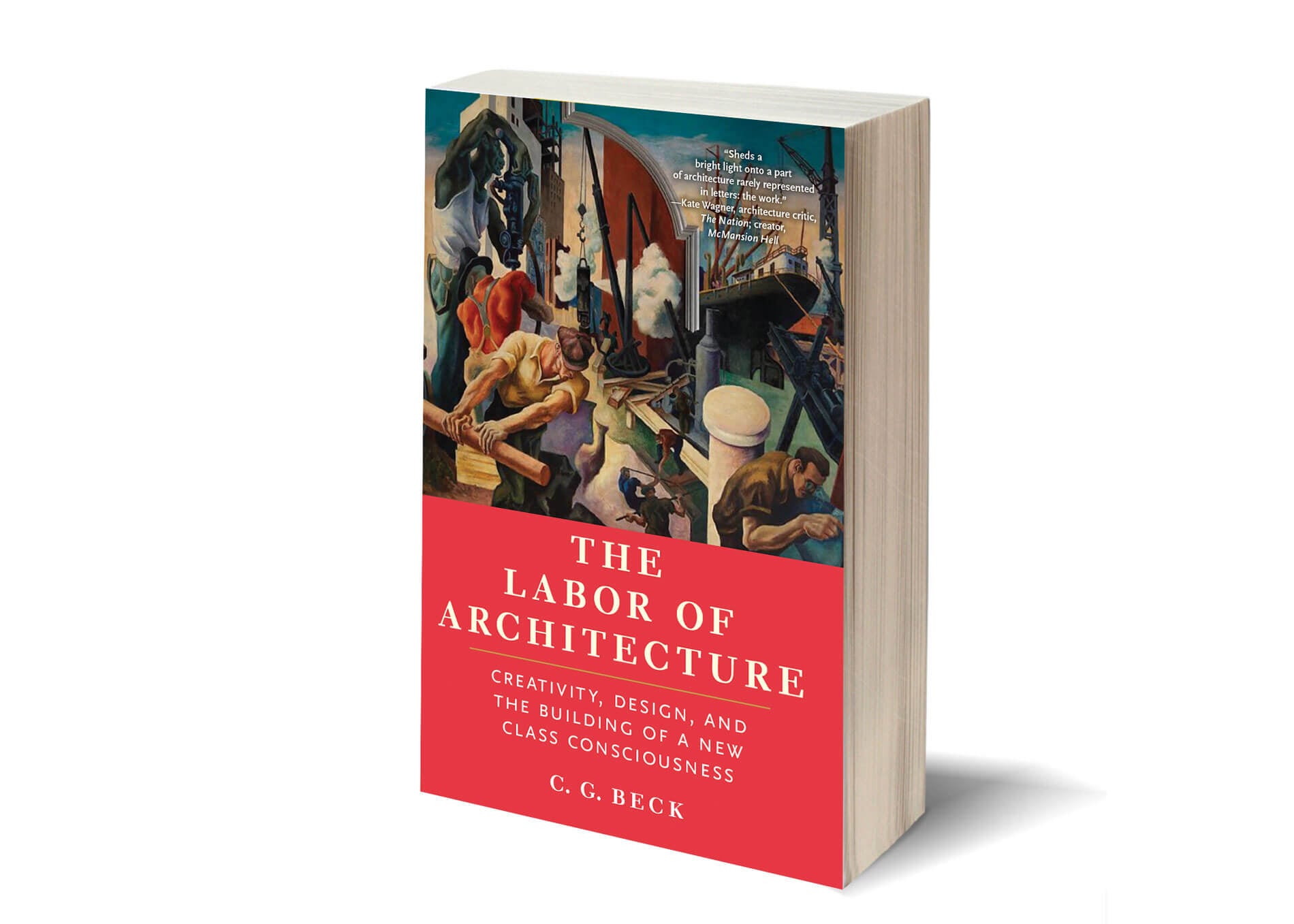
Photo caption and credit:
The Labor of Architecture (book cover photo). credit: Monthly Review Press
Doors Open at 6 PM | Book Talk will begin promptly at 6:30 PM
A book signing by the author will occur after the talk. Books will be available for purchase.
What does it mean to think of architects not simply as creative professionals, but as workers?
Join AIA|DC’s Advocacy Committee for a conversation with architect and labor organizer C.G. Beck, author of The Labor of Architecture: Creativity, Design, and the Building of a New Class Consciousness. Beck challenges the profession’s longstanding image of the architect as an individual creative “genius” and examines the realities of architectural labor—including precarity, inequity, workplace conditions, and the growing movement toward collective action and unionization.
The conversation will explore what architects have in common with workers in other industries, how labor organizing can reshape architectural practice, and what a more collective and solidarity-based profession might look like.
The discussion will be moderated by Susan Piedmont-Palladino, Director of Virginia Tech’s Washington-Alexandria Architecture Center (WAAC), and will include an opportunity for audience questions.
The event is open to AIA|DC members and the general public. C.G. Beck will be available for a book signing, and copies of The Labor of Architecture will be available for purchase at Solid State Books.
Presenter Name(s):
C.G. Beck (Author), Susan Piedmont-Palladino (Moderator)
Presenter Bio(s):
C.G. Beck is an architect, labor organizer, and teacher based in Brooklyn, New York. He served on the organizing and bargaining committees for the first private-sector architecture union in the United States and continues to organize workers through campaigns with the Architects Workers Union (AWU) and related labor initiatives. Beck also teaches at The New School, where he combines his professional experience with critical engagement on labor, design, and collective action. His work dismantles conventional narratives about architectural practice to foreground architecture as labor embedded in broader social and economic systems.
Susan Piedmont-Palladino is an architect, professor of architecture, and the Director of Virginia Tech’s Washington-Alexandria Architecture Center (WAAC), the urban extension of the College of Architecture, Arts, and Design. A graduate of Virginia Tech and the College of William and Mary, she has lectured on urbanism, sustainability, and communications, to public, professional, and academic audiences in the US, Europe and Latin America. Since 2003 she has been a consulting curator at the National Building Museum and the author of several books, including companion books for exhibitions and initiatives she curated, such as Tools of the Imagination: drawing tools and technologies from the 19th century to the present, Green Community, Intelligent Cities, and Timber City. She served as co-curator for Justice is Beauty: The Work of MASS Design Group. Her book, How Drawings Work: A User-Friendly Theory, published by Routledge in 2019, takes a fresh and unconventional look at the languages of graphic communications. Her current research focuses on how American public spaces are shaped and re-shaped by our shifting values of openness and security.
Learning objective 1
Identify historical and contemporary factors that shape labor conditions in architectural practice, including professional credentialing, workplace structures, compensation, precarity, and the traditional “creative professional” model.
Learning objective 2
Examine how issues of class, power, equity, and collective bargaining intersect with the daily work and professional identity of architects and designers.
Learning objective 3
Discuss the potential role of collective action, worker organizing, and unionization in improving workplace conditions and reshaping the architectural profession.
Learning objective 4
Evaluate how architects can apply principles of solidarity and advocacy to their own practices, workplaces, and broader engagement with the built environment.